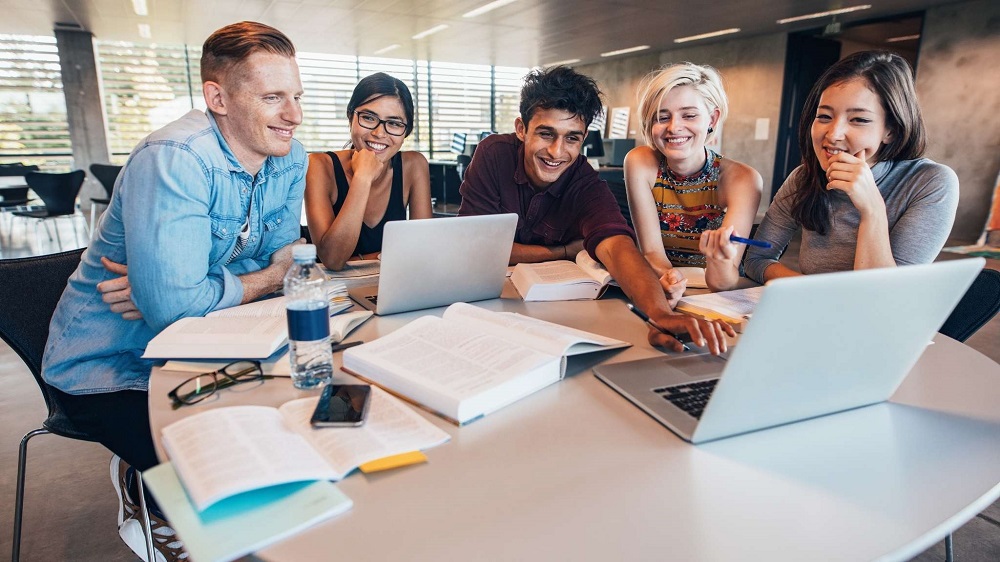
Educational environments have undergone a fundamental shift from traditional teacher-led instruction toward student-centered learning methodologies. While direct instruction remains an important component of schooling, relying solely on lectures can leave students as passive consumers of information. Peer learning and collaborative study frameworks offer a dynamic alternative, transforming students into active participants in their own intellectual growth.
When learners work together to solve complex problems, explain intricate concepts to one another, and evaluate differing perspectives, they cultivate a deeper understanding of academic material. Beyond academic performance, collaborative environments build essential interpersonal habits, critical thinking capacities, and emotional intelligence. Examining how peer learning operates across various educational contexts highlights why collaborative learning is essential to modern instructional design.
Defining Peer Learning and Collaborative Frameworks
Peer learning is an educational practice where students interact with one another to attain educational goals. Rather than relying exclusively on an authority figure for knowledge transmission, students learn with and from their peers through structured dialogue, mutual feedback, and shared problem-solving.
Core Structures of Collaborative Learning
Peer interaction in academic settings takes several forms, depending on the educational objectives and classroom dynamics.
-
Peer Tutoring: A structured arrangement where one student instructs another on specific academic content, reinforcing knowledge for both participants.
-
Reciprocal Teaching: An instructional activity where students take turns acting as the teacher, leading discussions on reading passages or problem sets.
-
Small Group Problem-Solving: Groups of three to five students working together to analyze a case study, complete a laboratory experiment, or build a joint project.
-
Peer Assessment and Review: Students evaluate each other’s work against defined rubrics, offering constructive criticism and identifying areas for revision.
Each structure provides specific cognitive and social benefits, allowing educators to tailor peer interactions to match curriculum goals.
Cognitive and Academic Advantages of Learning Together
Engaging with peers stimulates cognitive processes that rarely occur during solo study or passive listening. Working through concepts aloud forces students to organize their thoughts, identify gaps in their understanding, and refine their reasoning.
Deepening Conceptual Understanding Through Explanation
Explaining a concept to a peer requires a higher level of mastery than simply recognizing the concept on a test. Known in cognitive psychology as the learning-by-teaching effect, articulating ideas in plain language forces the speaker to re-encode the material mentally.
-
Clarifies personal misunderstandings when attempting to explain steps to a teammate.
-
Promotes knowledge retention by creating stronger neurological pathways through verbal elaboration.
-
Encourages students to use analogies, examples, and alternative explanations to help peers grasp difficult topics.
When a student teaches a classmate, both individuals gain a clearer, more durable understanding of the topic.
Enhancing Critical Thinking and Problem-Solving Skills
Collaborative learning environments naturally expose students to diverse viewpoints, problem-solving strategies, and interpretations. When group members disagree on how to approach a task, they must justify their arguments with evidence and evaluate alternative proposals.
-
Challenges cognitive biases and unexamined assumptions through constructive debate.
-
Encourages analytical thinking as students evaluate the validity of competing solutions.
-
Teaches students to break complex, multi-faceted problems into manageable components through group labor division.
This iterative process of debate and negotiation trains students to analyze issues objectively rather than settling for surface-level answers.
Improving Information Retention and Engagement
Active participation directly correlates with higher information retention rates. Working in groups keeps students engaged, reducing the mental fatigue often associated with extended periods of passive listening.
-
Immediate peer feedback prevents the reinforcement of incorrect information during practice sessions.
-
Interactive discussions make abstract academic concepts feel more tangible and relatable.
-
Cooperative goals create a sense of shared responsibility, motivating students to prepare thoroughly.
This increased engagement leads to higher academic achievement across diverse subject areas, from humanities to quantitative sciences.
Social and Emotional Benefits of Collaborative Learning
While the academic advantages of peer learning are substantial, the social and emotional growth fostered by group work is equally valuable. Collaborative activities serve as a microcosm of community life, teaching students how to navigate human relationships productively.
Developing Essential Communication Skills
Effective collaboration requires clear, respectful, and purposeful communication. Working in groups gives students continuous practice in both verbal and nonverbal communication.
-
Active Listening: Learning to listen attentively to classmates without interrupting, ensuring everyone feels heard.
-
Articulating Ideas: Translating internal thoughts into clear, concise verbal statements that others can understand.
-
Constructive Feedback: Delivering critiques that focus on work quality and objective criteria rather than personal attributes.
-
Nonverbal Awareness: Reading body language and vocal tone to gauge group consensus and engagement.
Developing these skills early prepares students for complex interpersonal dynamics in their personal and professional lives.
Building Empathy and Cultural Competence
Classrooms bring together individuals from varied socioeconomic backgrounds, cultural heritages, and learning capabilities. Collaborative learning breaks down social barriers by pairing students who might not otherwise interact.
-
Exposes learners to diverse lived experiences and cultural viewpoints.
-
Fosters empathy as students recognize the unique strengths and challenges of their peers.
-
Reduces social anxiety by creating smaller, more supportive learning communities within large classrooms.
Working toward a shared goal cultivates mutual respect, helping students appreciate cognitive diversity and varied approaches to problem-solving.
Strengthening Self-Efficacy and Reducing Academic Anxiety
Facing difficult academic challenges alone can trigger anxiety and feelings of inadequacy. Peer learning builds a supportive network that normalizes struggle as a natural part of the learning process.
-
Seeing peers wrestle with difficult concepts reduces the fear of making mistakes.
-
Shared success builds self-efficacy, reassuring students of their capacity to master tough subjects.
-
Group support networks provide emotional encouragement during high-stakes academic periods.
This psychological safety encourages students to take intellectual risks, ask questions freely, and approach challenging tasks with confidence.
Preparing Students for the Modern Workforce
The contemporary job market places a premium on soft skills and collaborative capacity. Employers consistently cite teamwork, adaptability, and interpersonal communication as top qualities in prospective hires.
Simulating Workplace Dynamics
Modern professional environments rarely operate in isolation. Cross-functional teams, interdisciplinary projects, and remote collaboration are standard across business, healthcare, engineering, and technology sectors.
-
Teaches project management skills, including delegating tasks, establishing timelines, and tracking progress.
-
Trains students to navigate workplace conflict constructively without sacrificing team cohesion.
-
Prepares individuals to integrate feedback from supervisors, clients, and teammates.
By embedding collaborative learning into daily coursework, educational institutions ensure graduates can transition smoothly into team-oriented work environments.
Developing Leadership and Conflict Resolution Capacities
Group work provides a risk-free environment for students to experiment with different team roles, including leadership and facilitation.
-
Leadership opportunities arise naturally as students take initiative in organizing group efforts.
-
Conflict resolution skills are sharpened when group members must resolve differing work ethics or creative vision clashes.
-
Accountability mechanisms teach students to honor commitments made to their peers.
These experiences foster mature, adaptable individuals capable of guiding teams through complex projects.
Strategies for Structuring Effective Peer Learning
Unstructured group work can lead to unequal participation, frustration, and off-task behavior. To unlock the full potential of peer learning, educators must design and monitor collaborative activities intentionally.
Establishing Clear Group Norms and Expectations
Before launching a collaborative project, educators should work with students to establish clear guidelines for group conduct and effort distribution.
-
Define specific roles within groups, such as facilitator, recorder, timekeeper, and spokesperson.
-
Create explicit rubrics for both individual contributions and collective deliverables.
-
Reiterate guidelines for respectful dialogue, constructive critique, and active participation.
Clear expectations prevent common pitfalls like free-riding, where a single student carries the group workload while others remain passive.
Designing Interdependent Tasks
For collaborative learning to succeed, the task must require genuine cooperation rather than simple task division that can be completed in isolation.
-
Use complex, open-ended scenarios that lack a single obvious answer.
-
Implement jigsaw learning structures, where each student becomes an expert on one piece of information necessary to solve the larger puzzle.
-
Require synthesized group submissions that integrate input from every team member.
When tasks are designed around positive interdependence, students realize that individual success depends directly on team success.
Frequently Asked Questions
How can teachers prevent one dominant student from taking over a group project?
Preventing single-student dominance requires structural intervention from the educator. Teachers can assign specific, rotating roles within each group so that leadership duties are distributed evenly. Additionally, incorporating individual accountability measures, such as individual reflections, separate grading components, or mid-project peer evaluations, ensures that every student has a designated space to contribute and receive credit for their work.
Is peer learning suitable for introverted or socially anxious students?
When implemented thoughtfully, peer learning can significantly benefit introverted students. Working in small groups of two or three feels far less intimidating than speaking in front of an entire classroom. Teachers can support introverted learners by building in individual reflection time before group discussions begin, allowing students to write down their thoughts in advance so they feel prepared to share them with peers.
How does collaborative learning affect high-achieving students who prefer to work alone?
High-achieving students benefit greatly from peer learning through the cognitive process of explaining concepts to others. Teaching material to classmates deepens knowledge retention and exposes gaps in foundational understanding that high-achievers might overlook during solo study. Furthermore, group work develops non-academic leadership, patience, and communication skills that are vital for future academic and career success.
How do educators grade collaborative assignments fairly without penalizing hard-working students?
Fair grading in collaborative learning involves combining individual and group evaluation metrics. Teachers often award an overall team grade for the final deliverable while assessing individual mastery through separate quizzes, individual reflection essays, or detailed peer evaluation forms. This dual approach ensures that individual effort is recognized while encouraging students to support their teammates.
What is the ideal group size for effective peer collaboration in the classroom?
Research indicates that the ideal group size for most classroom collaborative tasks is three to four students. Groups of this size are large enough to bring diverse perspectives and division of labor to a project, yet small enough to ensure every member remains actively engaged. Groups larger than five often lead to fragmented conversations, off-task behavior, and reduced individual participation.
How can peer learning be implemented effectively in online or remote educational settings?
Online peer learning utilizes digital collaboration tools such as breakout rooms, shared cloud documents, interactive whiteboards, and asynchronous discussion forums. Teachers can assign collaborative tasks where students simultaneously edit documents, record group video presentations, or provide peer feedback using digital commenting tools, recreating the interactive dynamics of a physical classroom.
What is the difference between cooperative learning and collaborative learning?
Cooperative learning is typically more structured and teacher-directed, with specific roles assigned to students and clear, step-by-step instructions provided to reach a specific answer. Collaborative learning is more student-driven and open-ended, requiring group members to organize their own approach, negotiate responsibilities, and explore complex issues that may have multiple valid solutions or outcomes.