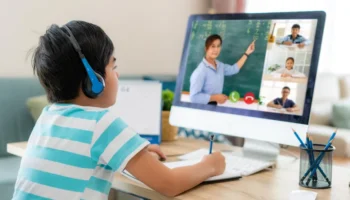
Educational accessibility has long been defined by physical accommodations, localized resources, and basic compliance standards. Traditional frameworks relied heavily on wheel-chair ramps, large-print textbooks, isolated special education classrooms, and standard assistive hardware. While these structural elements remain vital, the ongoing digital transformation of learning has completely shifted the boundaries of what true access requires.
The next frontier of educational accessibility extends far beyond physical presence and basic digital adaptation. It centers on dynamic, hyper-personalized, and proactive learning environments capable of adapting to the individual needs of every learner in real time. Driven by advances in artificial intelligence, immersive technology, multimodal interface design, and universal policy frameworks, this new paradigm aims to eradicate systemic learning barriers before a student ever encounters them. Achieving this future demands moving from retrofitted solutions toward native, inclusive architectural design in modern education systems.
The Paradigm Shift from Compliance to Universal Design
Historically, accessibility in academic institutions functioned as a reactive afterthought. Systems were created for a neurotypical, physically able average student, and modifications were applied only after a learner disclosed a disability. This model repeatedly placed the burden of advocacy on the student, generating administrative friction, delays in receiving accommodations, and social stigmatization.
The modern paradigm replaces this reactive stance with Universal Design for Learning, a framework that embeds flexibility into the core architecture of educational systems. Rather than altering a static curriculum for specific individuals, modern platforms offer varied pathways for engagement, representation, and action from the start.
Key shifts defining this transformation include:
-
Moving from static, one-size-fits-all digital textbooks to fluid, multimodal content systems that automatically adjust text complexity, visual formatting, and audio parameters based on real-time student interactions.
-
Transitioning from isolated, physical assistive devices toward natively integrated accessibility features across operating systems and browser environments.
-
Shifting focus from passive regulatory compliance toward active usability, ensuring that digital learning portals, library databases, and assessment engines are fundamentally intuitive for all learners.
-
Reframing neurodivergence and varied learning speeds as expected variations in human cognitive processing rather than deficits requiring remediation.
Technological Pillars Driving Next-Generation Accessibility
Recent technological breakthroughs are fundamentally changing how educational material is created, delivered, and experienced. By leveraging emerging digital infrastructure, educators can address complex accessibility challenges at a global scale.
Artificial Intelligence and Adaptive Cognitive Support
Artificial intelligence stands as a primary catalyst in personalized learning support. Machine learning models can analyze how a student interacts with complex text or spatial concepts, identifying exact points of cognitive overload or frustration in real time.
For neurodivergent students or those with executive functioning challenges, AI-driven engines can dynamically break down dense academic prose into structured summaries, generate contextual visual aids, or adjust vocabulary levels without altering the core rigorous content. Intelligent tutoring platforms provide non-judgmental, on-demand scaffolding, allowing students with processing delays or social anxiety to master difficult concepts safely at their own pace. Furthermore, predictive text engines and speech generation models have advanced significantly, enabling students with non-verbal conditions or fine-motor impairments to draft essays, participate in forum discussions, and express original ideas smoothly.
Advanced Multimodal and Immersive Interfaces
Learning environments are moving beyond the traditional constraints of screen-based, text-heavy interfaces. Modern augmented reality and virtual reality technologies offer multi-sensory entry points into complex academic subjects.
-
Haptic feedback interfaces allow visually impaired learners to physically feel geometric shapes, molecular bonds, or geographical contours rendered on digital surfaces.
-
Spatial audio environments and dynamic captioning systems enable deaf or hard-of-hearing students to follow multi-speaker group discussions with visual spatial tracking and instant transcriptions.
-
Immersive virtual simulations provide neurodivergent students with safe, controllable settings to practice social communication, public speaking, or complex laboratory procedures without real-world sensory overload.
Neural and Non-Invasive Assistive Tech Integration
Beyond standard eye-tracking systems and voice-controlled interfaces, direct non-invasive neural interfaces are beginning to transition from clinical settings into educational applications. Brain-computer interfaces and advanced electromyographic sensors detect micro-muscular movements or cognitive intent, allowing individuals with severe physical disabilities, such as paralysis or motor neuron conditions, to navigate digital courses, manipulate virtual tools, and communicate effectively without physical reliance on traditional mice or keyboards.
Overcoming Systemic Barriers to Universal Implementation
While the technological capabilities powering the future of educational accessibility are impressive, their real-world implementation faces significant socio-economic and structural hurdles. Without deliberate intervention, technological advancements risk widening existing educational divides.
Bridging the Global Digital and Technological Divide
The most advanced adaptive learning tools require high-speed internet connectivity, modern hardware, and stable power infrastructure—resources that remain unevenly distributed worldwide. Rural communities, underfunded public school districts, and developing nations frequently lack the foundational technology needed to run sophisticated accessible software. Addressing this disparity requires investment in lightweight, offline-capable open-source accessible tools that run efficiently on low-cost hardware without sacrificing utility.
Safeguarding Data Privacy and Mitigating Algorithmic Bias
Adaptive educational platforms collect vast volumes of sensitive data, including keystroke dynamics, eye-tracking patterns, voice recordings, and cognitive processing speeds. Protecting student privacy is paramount. Educational institutions must enforce strict data governance policies to ensure that personal health and learning data are never monetized or exposed to cyber threats.
Additionally, machine learning models trained on non-representative datasets risk propagating subtle biases. If an algorithm incorrectly classifies a student’s unique processing style as a lack of comprehension or misinterprets non-standard speech patterns, it can lead to inappropriate learning placements or unfair academic assessments. Continuous algorithmic auditing and inclusive data sampling are essential to prevent technological tools from perpetuating historical inequalities.
Professional Development and Organizational Culture
Hardware and software solutions are ineffective if educators lack the confidence and training to integrate them into daily classroom instruction. Modern professional development must move beyond basic technical troubleshooting to focus on inclusive pedagogy. Teachers need comprehensive support to understand how to interpret diagnostic data, configure multi-modal learning pathways, and foster classroom environments where assistive technologies are integrated naturally rather than treated as disruptive exceptions.
Structural Strategies for Building Fully Inclusive Institutions
Creating a fully accessible educational ecosystem requires concerted action from administrators, policymakers, software developers, and instructional designers. Sustained progress relies on systematic, repeatable frameworks.
-
Embed accessibility criteria into procurement policies: Educational leaders must require all software vendors, textbook publishers, and hardware suppliers to meet rigorous international accessibility standards as a mandatory prerequisite for institutional contracts.
-
Involve diverse learners in technology design: Platforms and curricula should be co-designed with continuous input from neurodivergent individuals and students with physical, sensory, or cognitive disabilities.
-
Establish centralized accessibility centers: Institutions should create dedicated teams that combine instructional design, legal compliance, and technical expertise to support both students and faculty members across all academic disciplines.
-
Secure sustainable, long-term funding models: Allocations for accessible infrastructure must be treated as core operational investments rather than temporary grant-funded initiatives or discretionary budget items.
The Broad Impact of Inclusive Learning Systems
Advancing educational accessibility ultimately benefits the broader academic ecosystem. Design innovations initially engineered for specific disability accommodations consistently yield unexpected benefits for all learners—a phenomenon known as the curb-cut effect.
For example, real-time closed captioning developed for deaf students dramatically improves reading comprehension and language acquisition for non-native language speakers, visual learners, and students studying in noise-sensitive environments. Flexible pacing tools designed for neurodivergent individuals help working adult learners, student-athletes, and caregivers manage demanding schedules. By engineering learning environments that accommodate the full spectrum of human variability, society creates a more adaptable, resilient, and intellectually rich global community.
Frequently Asked Questions
How does Universal Design for Learning differ from traditional special education accommodations?
Traditional special education relies on a diagnostic model where an individual student must disclose a documented disability to receive personalized modifications to an existing, standardized curriculum. Universal Design for Learning proactively designs the curriculum, materials, and evaluation methods to be flexible from the outset. This allows all students to customize their learning experience through multiple means of engagement, representation, and expression without needing formal administrative exemptions or structural retrofits.
What role do open-source technologies play in making education accessible globally?
Open-source technologies lower the cost barrier associated with proprietary assistive software licenses and specialized hardware. By providing freely accessible source code, global communities of developers, educators, and advocates can build, translate, and customize adaptive learning tools to fit local languages, cultural contexts, and low-bandwidth constraints. This decentralization ensures that students in under-resourced regions can access modern educational accommodations without incurring prohibitive costs.
Can generative AI fully replace human special education professionals?
Generative AI cannot replace human special education professionals. While AI engines excel at processing data, dynamically adjusting content formats, automating routine administrative tasks, and providing continuous practice support, they lack human empathy, emotional intelligence, and pedagogical nuance. Special educators provide essential mentorship, behavioral support, complex decision-making, and personal encouragement that no software platform can replicate. AI functions best as an supportive tool that amplifies a teacher’s capacity to serve diverse classrooms.
How can small, underfunded institutions begin upgrading their educational accessibility?
Small institutions can start by implementing low-cost, high-impact policy and technical changes. This includes utilizing built-in accessibility features within existing operating systems and productivity suites, mandating that all faculty members use native document accessibility checkers before publishing course materials, leveraging free open-source media captioning tools, and incorporating universal design principles into lesson planning. Incremental cultural and instructional changes often yield major immediate improvements in student access without requiring massive capital investments.
How does next-generation accessibility address hidden or non-visible disabilities?
Next-generation accessibility design focuses heavily on non-visible disabilities, including neurodivergent conditions like autism and ADHD, learning differences such as dyslexia, and chronic mental health or executive functioning challenges. Platforms address these needs by offering customizable user interfaces that allow learners to reduce visual distractions, adjust typography, manage sensory inputs, utilize cognitive pacing tools, and access alternative content representations without drawing public attention to their specific needs.
What steps are being taken to ensure emerging virtual and augmented reality platforms are accessible?
Engineers and digital accessibility advocates are developing unified standards for spatial computing environments, similar to established web content accessibility guidelines. These initiatives include integrating customizable spatial audio cues, implementing head-tracking and eye-tracking navigation options for users with limited physical mobility, offering dynamic text overlay scaling within 3D environments, and engineering safety controls that allow users to manage immersive motion and visual triggers that might induce disorientation or sensory overload.